Instant-OFF Potential
Quick answer
Instant-OFF potential is the structure-to-electrolyte potential measured immediately after the relevant CP/influencing current is interrupted, with the switching transient excluded.
It is intended to approximate the polarized potential without the voltage-drop components associated with current that was successfully interrupted.
A valid Instant-OFF reading depends on which current sources influence the location, which were actually interrupted, synchronization where needed, transient rejection, measurement timing, residual current, and the normal reference-electrode, placement, and meter/circuit controls.
Instant-OFF is / Instant-OFF is not
| Instant-OFF is | Instant-OFF is not |
|---|---|
| An immediate post-interruption measurement state/result | Any reading taken sometime during an OFF cycle |
| A technique for reducing/evaluating voltage-drop effects from interrupted current | Proof that all IR drop is zero |
| Capable of representing polarized potential when required voltage-drop and timing conditions are satisfied | An unconditional synonym for polarized potential |
| Useful in criterion and polarization testing | The 100 mV polarization criterion by itself |
| Dependent on valid interruption and measurement conditions | Automatically valid because one rectifier was turned off |
Measurement sequence
A typical controlled sequence is:
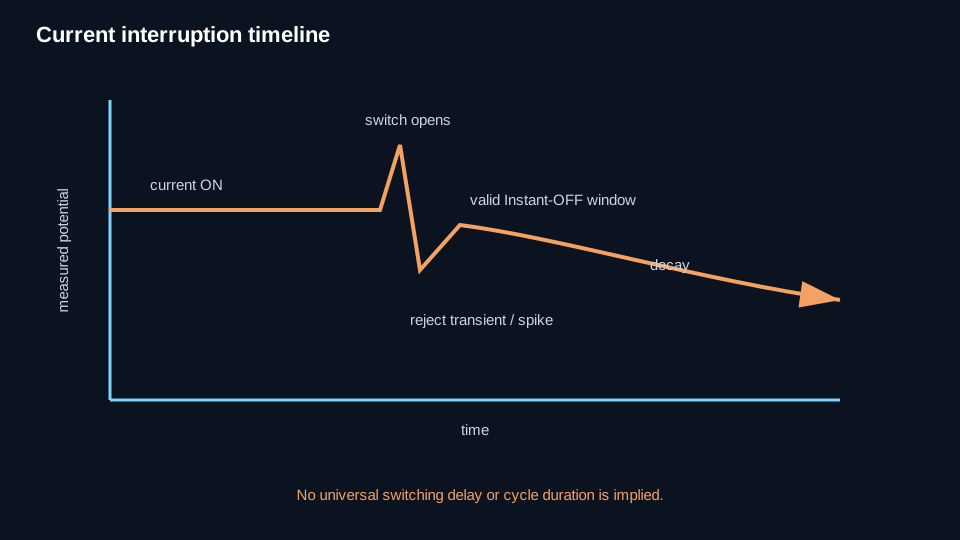
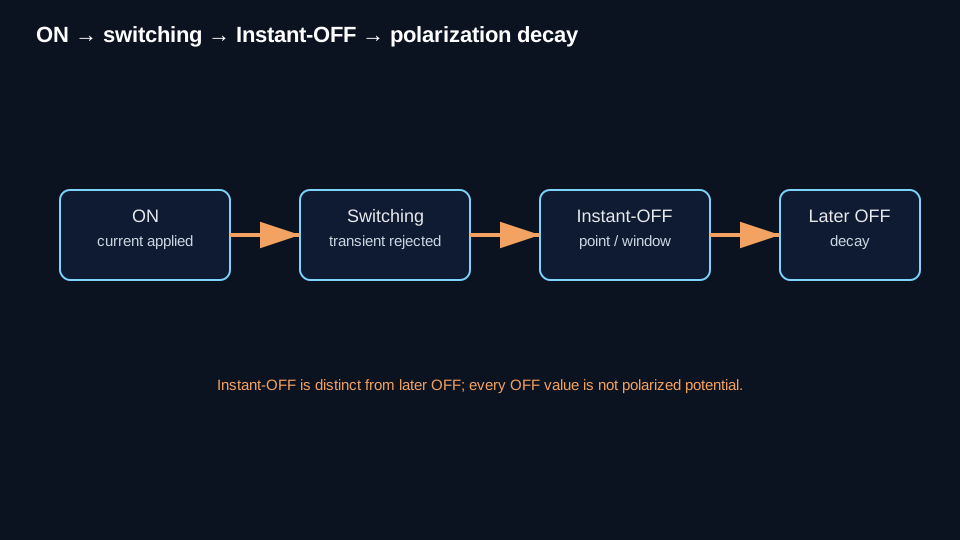
Current applied / ON → current switching event → transient/spike region to reject → Instant-OFF measurement window → polarization decay during continued OFF time.
The exact timing is system- and equipment-dependent. Do not apply one universal delay or ON/OFF cycle.
What makes the reading meaningful?
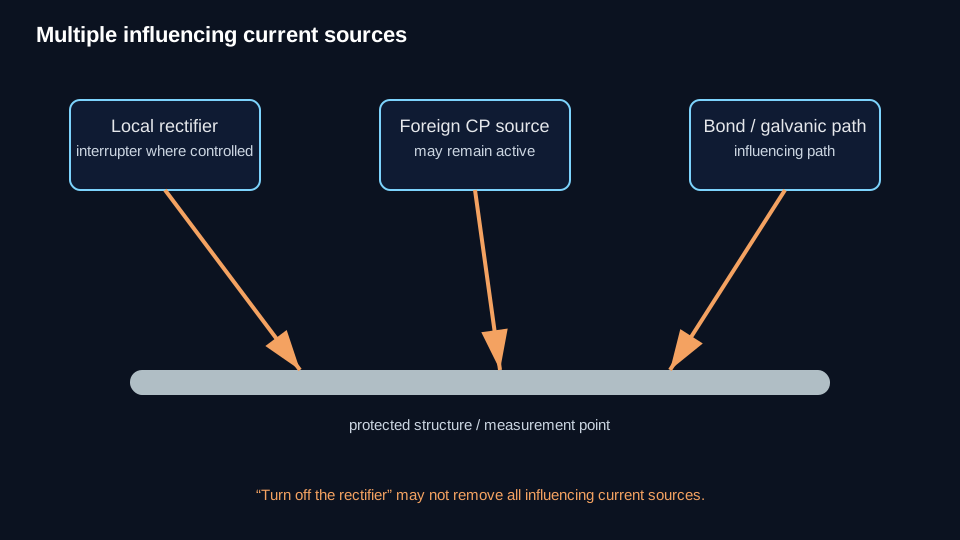
Influencing current sources are understood
A foreign CP source, galvanic current, cross-bond, or other source can continue to affect the reading.
Required sources are interrupted
Incomplete interruption can leave residual voltage error.
Synchronization is adequate
Where multiple sources need to be OFF together, out-of-sync interrupters can create different electrical states from cycle to cycle.
The switching transient is rejected
The opening event can create a spike. The spike is not the Instant-OFF potential.
The reading is not delayed into decay
Waiting too long allows polarization to decay. A later OFF reading may be a depolarization/decay value rather than Instant-OFF.
The measurement foundation is valid
Reference-electrode identity and condition, placement, contact, polarity, and meter/circuit effects remain important. Interruption does not repair those problems.
Instant-OFF and polarized potential
The terms must remain distinct.
A controlled Instant-OFF measurement can be treated as the polarized potential at the location when the relevant non-interface voltage drops have been eliminated and the timing/measurement conditions are valid.
Without those conditions, do not silently relabel an observed OFF-cycle value as polarized potential.
Instant-OFF and IR drop
Instant-OFF can reduce or remove voltage-drop components associated with currents that were actually interrupted.
It does not inherently remove effects from non-interrupted or residual current, meter loading, reference-electrode error, placement error, or switching/transient error.
Instant-OFF and criteria
Where an applicable criterion permits a polarized-potential route, a valid Instant-OFF measurement can support that route when it defensibly represents polarized potential. The criterion resource still controls asset applicability, reference basis, measurement validity, voltage-drop treatment, and the final comparison.
An Instant-OFF value can also provide a polarized starting point for a polarization-decay measurement, but one Instant-OFF value does not establish 100 mV polarization. A second defensible comparison state is required.
Common invalid interpretations
“The rectifier was OFF, so this is Instant-OFF.” Not necessarily. Timing and influencing-source conditions must establish the measurement state.
“Instant-OFF means all IR drop is gone.” No. Current that remains flowing can leave residual voltage error.
“Instant-OFF equals polarized potential.” Only when the required voltage-drop and timing conditions are satisfied.
“My Instant-OFF is −870 mV CSE, so it passes.” The applicable criterion still controls the decision.
What to check next
Use IR Drop for the voltage-drop mechanism and Structure-to-Electrolyte Potential or Reference-Electrode Placement when the measurement foundation is questionable. Current Interruption, Polarization, and Criteria remain controlled neighboring subjects and should be used when their canonical resources are available.
Technical visuals